Health and Safety Policy for Cleaners Richmond Upon Thames
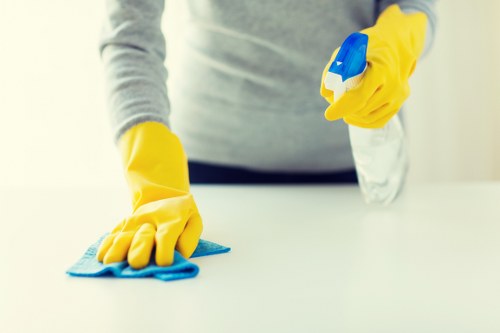 Our health and safety policy for cleaners in Richmond Upon Thames is designed to support safe, reliable, and professional cleaning services in every setting. Whether a team is working in homes, offices, shared buildings, or specialist environments, the focus remains the same: protect people, reduce risk, and maintain high standards of hygiene. A well-managed cleaning operation depends on clear procedures, suitable equipment, and careful attention to the working environment.
We believe that safety should be built into every stage of the cleaning process. This includes planning tasks properly, using the right products, and making sure all cleaners understand the potential hazards connected with their work. From slippery floors to chemical exposure, risks can arise quickly if they are not managed in a consistent way. That is why our policy places equal importance on prevention, supervision, and ongoing awareness.
 All cleaning activities should be carried out with a strong respect for the health of staff, building occupants, and visitors. This means using safe methods of work, following product instructions carefully, and reporting any unsafe condition without delay. Cleaners Richmond Upon Thames can help create cleaner spaces only when they are also working within a controlled and secure environment.
Risk assessments are essential before any routine or specialist task begins. These assessments help identify hazards such as wet surfaces, lifting strain, sharp objects, electrical equipment, or the presence of sensitive materials. After identifying the risk, suitable control measures should be introduced, such as warning signs, protective gloves, or changes to work methods. Effective risk management reduces accidents and supports a safer workplace for everyone involved.
Training is another key part of this policy. Every cleaner should understand how to use cleaning chemicals safely, how to handle equipment correctly, and what to do in an emergency. Training should also cover posture, safe lifting, and the importance of checking equipment before use. When staff are confident in their responsibilities, professional cleaners are better able to carry out their duties without unnecessary exposure to harm.
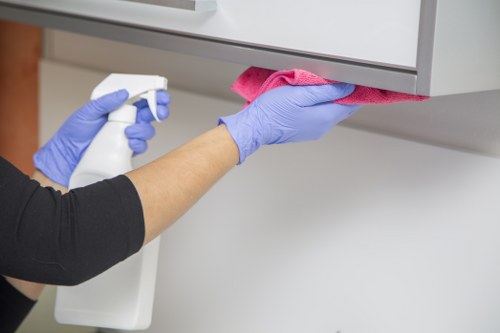 Personal protective equipment, or PPE, must be chosen according to the task. Gloves, aprons, masks, and slip-resistant footwear may all be required depending on the situation. PPE should be clean, properly fitted, and used consistently when risk assessment shows it is necessary. It is not a substitute for safe systems of work, but it provides an important extra layer of protection for cleaning staff.
Cleaning products must always be stored, handled, and labelled in a responsible manner. Chemical containers should remain sealed when not in use, and products should never be mixed unless the instructions clearly allow it. Ventilation should be considered when using strong substances, especially in enclosed rooms. Safe chemical management protects both cleaners and the people who use the space afterwards.
Equipment safety is equally important. Vacuum cleaners, machines, mops, cloths, and extension leads should be inspected regularly to ensure they remain suitable for use. Any damaged item should be removed from service until it has been repaired or replaced. Cleaners should also avoid overloading sockets and should be cautious around water and electricity. These simple controls help reduce preventable accidents in everyday cleaning work.
Manual handling must be approached with care because lifting, carrying, pushing, and pulling are common parts of the job. Tasks should be planned to avoid unnecessary strain, and heavy items should be split into smaller loads where possible. Cleaners Richmond Upon Thames who work with carts, boxes, or waste bags should use proper technique and ask for assistance when needed. Good manual handling habits help protect the back, shoulders, and joints over time.
 Housekeeping standards also play an important role in health and safety. Work areas should be kept tidy, with waste removed promptly and obstacles cleared from walkways. Spillages should be dealt with immediately, and temporary warning signs should be used whenever floors are wet or a surface is still drying. A neat and organised workspace reduces the chances of slips, trips, and falls, which are among the most common cleaning-related incidents.
Emergency procedures must be understood by all staff. This includes knowing how to respond to fire alarms, accidents, chemical splashes, or equipment faults. Cleaners should be aware of reporting routes for injuries, near misses, and hazards, so that problems are not repeated. A clear reporting culture supports learning and improvement, while also showing that health and safety is treated as a shared responsibility rather than an afterthought.
We also recognise the importance of wellbeing in every cleaning role. Fatigue, repetitive work, time pressure, and lone working can all affect concentration and performance. Reasonable scheduling, breaks, and communication help reduce the strain that may come with physically demanding tasks. By supporting staff wellbeing, a cleaning service can remain dependable, efficient, and professionally delivered.
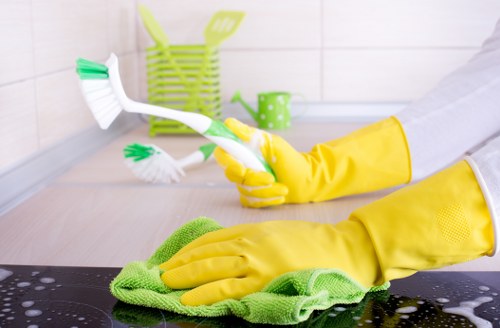 This policy applies to all routine and one-off cleaning assignments and should be followed by every member of staff, regardless of location or shift pattern. It reflects a commitment to safer practices, healthier working conditions, and careful service delivery. When cleaning safety procedures are applied consistently, they protect workers, clients, and property alike.
Continuous improvement is central to maintaining high standards. Procedures should be reviewed when new equipment is introduced, when working methods change, or when an incident shows that better controls are needed. Feedback from inspections, supervision, and internal checks helps strengthen the overall approach. In this way, Richmond Upon Thames cleaners can continue to provide a service that is both effective and responsibly managed.
In practice, a strong health and safety policy is not only about avoiding harm; it is about creating the conditions for reliable, high-quality cleaning. By combining awareness, training, appropriate equipment, and careful supervision, cleaning teams can work confidently and safely across a wide range of environments. That commitment benefits everyone who depends on a clean, well-maintained space.